
Holistic Mental Wellness Trends: How Trauma-Informed, Accessible Care Is Changing Mental Health Support
- Dr B., PhD

- Jan 29
- 3 min read
Updated: Feb 3
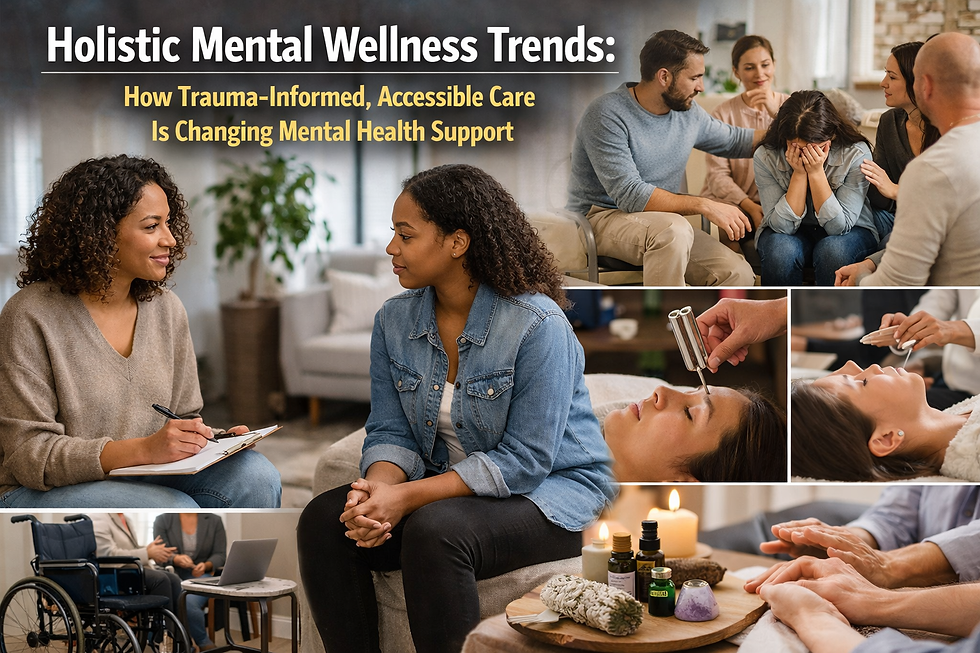
Are you looking for therapy options? Holistic therapy? Affordable counseling? You’re not alone. People from all walks of life across the country are seeking providers who offer more than diagnosis and medication and who provide a therapeutic experience that addresses the whole self. If you’re a therapist or provider, you have probably noticed this trend, too.
One of the biggest movements influencing the counseling field right now is a push toward holistic mental health: mental care that addresses the mind, body, and sense of emotional safety and security, and that is accessible.
As a therapist, I see this demand grow each day through my clients’ questions, service inquiries, and expectations of value when searching for a counselor.
What Is Holistic Mental Wellness?
Holistic mental wellness recognizes that mental health is influenced by more than thoughts alone. It includes:
The nervous system and body responses
Emotional safety and trauma history
Stress, sleep, and daily functioning
Relationships, identity, and environment
Access to care and financial feasibility
This approach moves away from “one-size-fits-all” therapy and toward personalized, trauma-informed care that meets clients where they are.
Mind–Body Approaches Are Becoming the Standard
One of the most important trends in mental health care is the integration of mind–body approaches.
Many clients seeking counseling today are looking for support that acknowledges:
Anxiety and stress are stored in the body
Trauma responses beyond conscious thought
The connection between emotional regulation and physical sensations
Holistic counseling may include:
Trauma-informed talk therapy
Mindfulness and grounding techniques
Nervous system regulation strategies
Psychoeducation about stress and trauma responses
These approaches help clients feel safer, more empowered, and more connected to their healing process.
Trauma-Informed Care: A Growing Priority for Clients
Trauma-informed counseling is something many clients are seeking these days, and there’s a reason:
Many clients seeking counseling today are looking for support that acknowledges:
Anxiety and stress are stored in the body
Trauma responses beyond conscious thought
The connection between emotional regulation and physical sensations
Holistic counseling may include:
Trauma-informed talk therapy
Mindfulness and grounding techniques
Nervous system regulation strategies
Psychoeducation about stress and trauma responses
These approaches help clients feel safer, more empowered, and more connected to their healing process. If you’re dealing with previous trauma, stress, relationship issues, or life transitions, you deserve a space where you can heal in therapy without fear of being traumatized again.
Accessibility Matters: Free & Low-Cost Mental Health Support
Another major trend shaping mental health care is the growing demand for accessible services, including:
Low-cost counseling options
Sliding-scale fees
Free therapy sessions or community-based services
Telehealth and virtual counseling
Many individuals delay seeking counseling because of financial concerns. Holistic mental wellness recognizes that access is part of care, not an afterthought.
When mental health services are more accessible, clients are more likely to:
Seek help earlier
Stay engaged in therapy
Experience long-term emotional growth
Demographic Shifts in How People Seek Counseling
Preferences for mental health care are changing across generations and communities.
Today, clients are increasingly seeking:
Therapists who value collaboration and transparency
Practices that acknowledge cultural and individual differences
Flexible scheduling and virtual counseling options
Care that feels human, not clinical or rushed
Younger adults, families, professionals, and underserved populations alike are prioritizing connection, accessibility, and holistic support over rigid models of care.
Why Holistic Counseling Works
Holistic mental wellness is effective because it:
Treats the person, not just the diagnosis
Supports emotional regulation and self-understanding
Encourages long-term growth, not quick fixes
Builds resilience, agency, and meaning
Healing is not linear, and holistic counseling respects that reality.
What to Look for When Searching for Counseling Services
If you’re looking for mental health support, trauma-informed care, or affordable counseling services, consider asking:
Does this practice offer trauma-informed care?
Are low-cost or free services available?
Is care personalized to my experiences and goals?
Does the provider value mind–body wellness?
Are virtual or flexible options offered?
The right counseling environment should feel safe, accessible, and aligned with your needs.
Final Thoughts
Holistic mental wellness isn’t a trend; it’s a reflection of what people truly need: care that is compassionate, accessible, and rooted in the whole human experience.
Whether you’re seeking trauma-informed therapy, free or low-cost mental health support, or counseling that honors both mind and body, you deserve care that meets you with respect and understanding.
Looking for Holistic, Trauma-Informed Counseling Services?
If you’re searching for mental health support that prioritizes:
Emotional safety
Accessibility
Mind–body wellness
Ethical, compassionate care
We’re here to help.
Your healing matters and support should never feel out of reach.
Contact us
TCL office number: 910 853-0009
FAX number 8338451846


Comments